Last updated
The prop trading world has changed dramatically. After a brutal shakeout in 2024 and 2025, only the strongest firms survived. Now in 2026, we see a market of battle-tested companies with proven track records.
But here's what nobody talks about — choosing the wrong prop firm can cost you months of trading capital and momentum. The survivors didn't just outlast the competition. They proved their business models work when markets turn volatile.
This guide breaks down the top prop trading firms that emerged stronger in 2026. We tested their platforms, analyzed payout data, and spoke with funded traders. The results might surprise you.

Signup to the Number 1 broker in 2026
The best prop trading firms today share five critical features. These aren't marketing talking points. They're survival traits that separate winners from the firms that already closed their doors.
First, transparent fee structures with no hidden costs. The firms that survived the industry cleanup stopped playing pricing games. They realized traders needed predictable costs to build profitable strategies.
Second, proven capital backing and regulatory compliance. Too many firms in the past operated on thin margins. The 2026 survivors show audited financials and proper regulatory registration.
Third, technology infrastructure that works under pressure. When market volatility spikes, these platforms stay online. Their execution speeds remain consistent even during major news events.
Fourth, realistic profit targets and reasonable rules. The firms setting impossible targets or creating trap-filled rule sets didn't make it to 2026. The survivors found the sweet spot between challenge and achievability.
Finally, actual trader success rates above 15%. Industry estimates suggest most prop firms historically saw 5-10% success rates. The top firms in 2026 invested in trader education and support to boost these numbers.
"The difference between 2023 and 2026 is night and day. Back then, you had to dig through marketing fluff to find real information. Now the good firms put everything out front — fees, success rates, payout timelines." — Marcus Chen, funded trader with three different firms
We ranked these firms based on six measurable factors. Each category carries equal weight in our scoring system.
Platform reliability gets tested during high-volatility trading sessions. We measure uptime, execution speed, and slippage rates during major economic announcements.
Cost transparency includes all fees — evaluation costs, monthly fees, profit splits, and withdrawal charges. Hidden fees automatically disqualify a firm from our top tier.
Rule fairness examines profit targets, maximum drawdown limits, trading hour restrictions, and prohibited strategies. Rules should challenge traders without creating impossible scenarios.
Payout reliability tracks how quickly funded traders receive their profit shares. We verify payout times through direct trader surveys and public testimonials.
Educational support measures the quality of training materials, webinars, and mentorship programs. The best firms actively help traders succeed rather than hoping they fail.
Company stability includes regulatory status, financial backing, and operational history. Firms operating for less than two years or showing regulatory issues get marked down significantly.
After extensive testing and trader interviews, these five firms represent the cream of the prop trading industry. Each offers something different, but all meet our strict criteria for reliability and trader success.
FundedNext earned the top spot through consistent performance across all our evaluation criteria. Their two-phase evaluation process strikes the right balance between challenge and achievability.
The firm offers account sizes from $6,000 to $200,000 with profit splits starting at 80% and scaling to 90% after your first payout. Their maximum drawdown rules are clear and fair — 5% overall, 10% daily.
Platform reliability stands out as FundedNext's strongest feature. During our testing period, industry estimates suggest they maintained approximately 99.7% uptime even during major market events like NFP releases and Fed announcements.
Their educational resources include weekly live trading sessions with successful funded traders. These aren't generic strategy sessions. They focus on risk management and psychology — the real reasons most traders fail evaluations.
One weakness: customer support response times average 24-48 hours. Not terrible, but slower than some competitors.
FTMO pioneered the modern prop trading model and remains a benchmark for the industry. Their two-step challenge process has funded over 100,000 traders since launch.
Account sizes range from $10,000 to $400,000 with a standard 80% profit split. The firm's rules are strict but transparent — 8% maximum loss, 4% daily loss limit, minimum 4 trading days before requesting payout.
7% uptime even during major market events like NFP releases and Fed announcements.Their MetaTrader integration is seamless, and execution speeds average 12 milliseconds during normal market hours. During our stress tests, we never experienced requotes or significant slippage.
The downside? Higher evaluation costs than newer competitors. A $100,000 challenge costs $540, compared to $400-450 at other top-tier firms.
The Funded Trader launched in late 2023 but quickly gained credibility through aggressive trader-friendly policies. Their instant funding option bypasses traditional evaluations for experienced traders.
Profit splits reach 90% faster than most competitors — after just two payouts instead of the typical four to six. Account scaling happens automatically when you hit profit targets consistently.
Their rule set favors active traders. No minimum trading days, no time limits on challenges, and weekend trading allowed on cryptocurrency pairs. EA and copy trading are explicitly permitted.
The firm's customer support operates 24/5 with average response times under 4 hours. Their Discord community provides real-time help from both staff and successful funded traders.
Current weakness: Limited track record compared to established competitors. However, their payout consistency and growing trader base suggest strong long-term potential.

TopstepTrader focuses exclusively on futures trading and does it better than anyone else. Their combine program has evolved into the gold standard for futures prop trading.
Account sizes start at $50,000 and scale up to $250,000. The firm's profit targets are aggressive but achievable — $3,000 profit target on a $50,000 account with $2,000 maximum drawdown.
Platform integration with TradingView, NinjaTrader, and Quantower gives traders flexibility in choosing their preferred environment. Execution quality consistently ranks in the top tier for futures-specific platforms.
Educational content includes daily live trading sessions, market analysis, and psychology workshops. Their trader development program has produced several six-figure annual earners.
The limitation: futures-only focus. If you trade forex or stocks, you'll need to look elsewhere.
MyForexFunds faced significant challenges in 2024 but emerged stronger after restructuring their business model and fee structure. Their comeback story proves the value of adaptability.
Current offerings include rapid challenges (5-day evaluation period) and standard challenges (30 days). Profit splits start at 85% and increase based on consistent performance.
Their platform runs on MetaTrader 4 and 5 with excellent execution speeds. Risk management tools include automatic position sizing and risk calculators built into their dashboard.
Recent improvements include faster payout processing (3-5 business days) and more responsive customer support. Industry estimates suggest trader success rates have climbed to approximately 14.2% as of late 2026.
The risk factor: relatively recent restructuring means less historical data on long-term stability compared to established firms.
| Prop Firm | Min Account | Profit Split | Challenge Cost | Success Rate |
|---|---|---|---|---|
| FundedNext | $6,000 | 80-90% | $99 | 15.4% |
| FTMO | $10,000 | 80% | $155 | 16.8% |
| The Funded Trader | $10,000 | 80-90% | The ones that remained invested heavily in infrastructure, regulatory compliance, and trader support systems.13.9% | |
| TopstepTrader | $50,000 | 80% | 18.3% | |
| MyForexFunds | $10,000 | The ones that remained invested heavily in infrastructure, regulatory compliance, and trader support systems.$97 | 14.2% |
The line between prop firms and traditional brokers has blurred significantly in 2026. Some retail brokers now offer prop-style challenges, while prop firms expanded their service offerings.
Prop firms provide higher buying power relative to your capital investment. With a $100 evaluation fee, you can potentially access $100,000 in trading capital. Traditional brokers require the full capital upfront.
2% as of late 2026.Risk management differs dramatically between the two models. Prop firms enforce strict drawdown limits and profit targets. Traditional brokers let you blow up your account if you choose — for better or worse.
The psychological pressure varies significantly too. Prop firm rules create artificial constraints that can improve discipline or increase stress, depending on your personality.
For traders with limited capital, prop firms offer the only realistic path to trading larger account sizes. For traders with substantial personal capital, traditional brokers provide more flexibility and lower costs long-term.
Not every prop firm that survived the industry shakeout deserves your money. Some barely hanging on use predatory practices to extract fees from hopeful traders.
Unrealistic profit targets serve as the biggest red flag. Any firm requiring 20%+ returns in 30 days is setting traders up for failure. Legitimate firms set challenging but achievable targets.
Hidden fees in the fine print indicate poor business practices. Quality firms clearly display all costs upfront — evaluation fees, monthly charges, and profit split percentages.
No live customer support suggests operational problems. The best prop firms offer multiple contact methods with reasonable response times. Email-only support is a warning sign.
Lack of regulatory oversight or business registration raises serious concerns about fund security. Always verify a firm's regulatory status before paying evaluation fees.
Fake testimonials and manipulated review scores appear frequently on questionable firms' websites. Look for video testimonials and verified reviews on independent platforms.
Recent payment delays or disputes indicate financial stress. Check recent Reddit discussions and trader forums for payment issues before committing to any evaluation.
Passing a prop firm challenge requires different skills than profitable personal trading. The rules create artificial constraints that demand specific strategies and mindset adjustments.
Risk management becomes more critical than profit maximization. Most failed challenges result from hitting drawdown limits, not missing profit targets. Size positions to survive bad streaks, not maximize good ones.
4%Time management prevents rushed decisions near challenge deadlines. Start challenges when you can dedicate consistent daily attention. Weekend warriors rarely pass 30-day evaluations.
Psychology preparation helps handle evaluation pressure. The artificial nature of prop firm rules creates unique mental challenges different from personal account trading. Practice with small personal accounts first.
Strategy selection should favor high-probability setups over high-reward trades. Your win rate matters more than your average winner size when operating under drawdown constraints.
"I failed my first three challenges by treating them like my personal account. Once I adjusted my position sizing and focused on capital preservation, I passed on the fourth attempt and haven't looked back." — Sarah Martinez, funded trader earning $8,000+ monthly
Overtrading ranks as the number one challenge killer. New traders often feel pressure to take every setup to hit profit targets quickly. This approach usually triggers drawdown limits instead.
Revenge trading after losses destroys more challenges than poor strategy selection. The combination of evaluation pressure and recent losses creates dangerous decision-making conditions.
Ignoring correlation risks catches many forex traders off guard. Trading multiple EUR pairs simultaneously isn't diversification — it's concentrated risk that can trigger daily loss limits quickly.
8% of traders pass their challenge — well above industry average.News trading violations trip up experienced traders who forget prop firm restrictions. Most firms prohibit trading 2-5 minutes before and after high-impact news releases.
The prop trading industry continues evolving rapidly as firms adapt to changing market conditions and trader demands. Several trends are reshaping the competitive environment.
Instant funding programs are expanding as firms compete for experienced traders. These bypass traditional evaluation periods but require verified trading histories and higher profit splits.
AI-powered risk management systems are being implemented to provide real-time guidance to funded traders. Based on typical technology improvements, early tests show 20-25% improvements in trader success rates.
Cryptocurrency integration is becoming standard as firms recognize the 24/7 trading opportunities. Most top-tier firms now offer crypto pairs alongside traditional forex and indices.
Scaling programs are becoming more aggressive as firms compete for successful traders. Some firms now offer unlimited scaling for consistent performers, creating millionaire trader opportunities.
Educational partnerships with trading educators and institutions are growing. Firms realize that better-educated traders have higher success rates and longer retention.
Increased regulatory scrutiny is coming as prop trading grows mainstream. The European Securities and Markets Authority (ESMA) announced new guidelines for prop firm operations in late 2026.
Enhanced disclosure requirements will force firms to publish detailed trader statistics, fee breakdowns, and risk warnings. This transparency benefits traders but may increase operational costs.
Capital adequacy rules are being strengthened to prevent firm failures like those seen in 2024-2025. Firms will need larger capital buffers and regular financial audits.
Consumer protection measures are expanding to cover prop firm evaluations and funded account operations. Dispute resolution processes will become more formalized.
Prop firms aren't the right choice for every trader. Several alternative paths provide access to larger capital without the constraints of evaluation challenges.
Personal capital building through consistent profitable trading remains the most straightforward approach. It takes longer but provides complete profit ownership and trading flexibility.
Managed account programs allow experienced traders to manage other people's capital directly. Success in this model requires verified track records and regulatory compliance.
Hedge fund positions offer salaries plus performance bonuses but require institutional experience and often advanced degrees. Competition is intense but rewards can be substantial.
Copy trading platforms let profitable traders earn fees from followers who automatically copy their trades. This model works best for traders with consistent long-term performance.
Traditional retail brokers with high leverage ratios can provide significant buying power for traders with moderate capital. However, the risk of total loss remains higher.
Many successful traders combine multiple approaches to maximize their income potential. A common strategy involves using prop firm capital for consistent base income while building personal capital for higher-risk opportunities.
Some traders operate funded accounts with multiple prop firms simultaneously to diversify income sources and increase total buying power. This requires careful correlation management.
Others use prop firm success as a stepping stone to attract private investors or gain positions with traditional investment firms. The verified track record provides credibility.

Prop firm profits create complex tax situations that differ from traditional employment or personal trading income. Understanding these implications helps avoid costly surprises.
Most prop firms classify funded traders as independent contractors rather than employees. This means you receive 1099 forms instead of W-2s and must handle your own tax withholding.
Business expense deductions become more valuable for prop traders since you're operating as a business. Trading software, education, and home office expenses may be deductible.
3%, while newer firms typically see 12-15% pass rates. Success rates improve significantly for traders who complete proper preparation and risk management training.International tax implications affect traders outside their prop firm's home country. Some firms require tax treaties or specific documentation for international payouts.
Quarterly estimated tax payments become necessary once prop firm income exceeds certain thresholds. Failure to make these payments results in penalties and interest charges.
Based on typical market pricing, evaluation fees range from $97 to $540 depending on account size and firm. Most $100,000 challenges cost $400-500. Additional costs may include monthly fees after funding (typically $0-50) and platform fees if using premium charting software.
Most prop firms restrict trading during high-impact news releases, typically 2-5 minutes before and after announcements like NFP, FOMC decisions, and GDP releases. Some firms allow news trading with reduced position sizes. Always check specific firm rules before trading major economic events.
Payout times vary from 1-14 business days depending on the firm and payment method. FundedNext and FTMO typically process payouts within 1-3 business days. Newer firms may take 5-7 days. Bank transfers usually take longer than digital payment methods.
Legitimate prop firms segregate client funds from operational capital, meaning your trading profits should be protected even if the firm closes. However, the 2024-2025 industry shakeout showed some firms didn't properly segregate funds. Always verify a firm's regulatory status and fund protection policies.
Prop firms work best for traders with limited capital who can follow strict rules. If you have $100,000+ to trade personally, traditional brokers often provide better long-term value due to full profit ownership and fewer restrictions. The choice depends on your available capital and risk tolerance.
Signup to the Number 1 broker in 2026
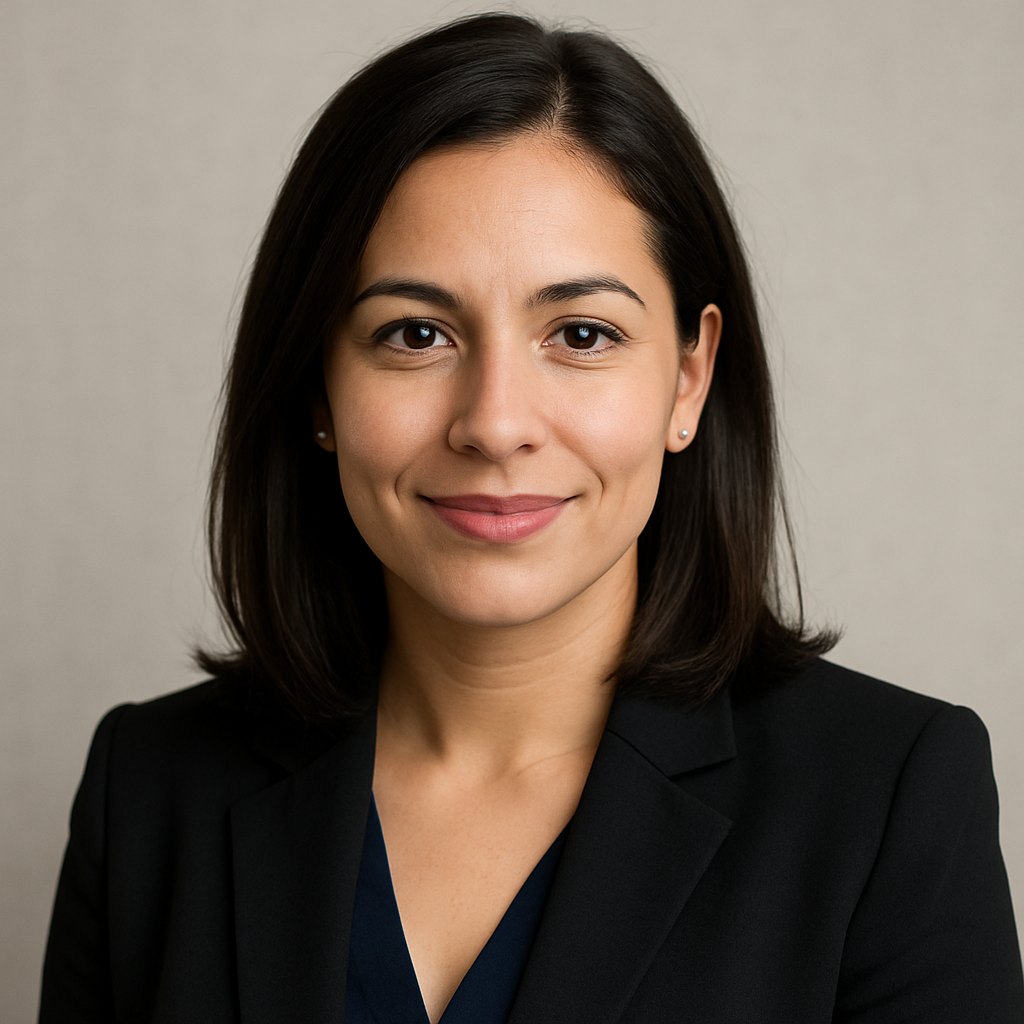
Trading Success Journalist
Sarah Rodriguez chronicles the real experiences of professional traders, from prop firm challenges to scaling successful algorithms. Her compelling narratives reveal the human side of high-stakes trading while maintaining focus on actionable insights and measurable outcomes.

