Last updated

Based on typical crypto trading patterns, industry estimates suggest that 68% of crypto margin traders lose money within their first three months. The difference between success and failure often comes down to one crucial factor: choosing the right broker.
Finding a reliable crypto margin trading broker isn't just about low fees anymore. Today's successful traders need platforms that combine institutional-grade execution with transparent conditions and rock-solid fund protection.
This guide examines the top crypto margin trading brokers for 2026. We'll break down execution quality, regulatory protection, and real trading costs that matter to your bottom line.
The best crypto margin trading brokers excel in four key areas: execution speed, regulatory compliance, fund protection, and transparent pricing.
Execution speed determines whether you get filled at your intended price. Top-tier brokers deliver sub-15ms execution times, even during high volatility periods. This matters because cryptocurrency markets move fast, and a 100ms delay can cost you significant slippage.
Regulatory compliance protects your capital. The strongest brokers hold licenses from tier-one regulators like the FCA, ASIC, or CYSEC. These licenses require segregated client funds and independent audits.
Transparent pricing eliminates hidden costs. The best platforms charge clear, upfront fees without surprise markups or variable spreads that widen during news events.
Professional-grade brokers also provide negative balance protection. This feature prevents your account from going below zero, even if extreme market moves cause losses beyond your deposit.
Signup to the Number 1 broker in 2026
After analyzing execution quality, regulatory strength, and trader feedback, five brokers stand out for 2026.
Kraken Pro leads the pack with up to 10x leverage on major cryptocurrencies and competitive margin rates starting at 0.02%. The platform offers both spot margin and futures trading across 200+ crypto pairs.
Industry estimates suggest their order matching engine processes over 1.4 million transactions per second. This high-frequency capability means your orders get filled quickly, even during market rushes.
Kraken holds licenses from regulators in the US, UK, and Europe. They maintain full reserve banking and publish proof-of-reserves reports quarterly. Your funds stay in segregated accounts at major banks.
"Kraken's institutional-grade infrastructure gives retail traders access to professional execution quality. Their transparent fee structure and regulatory compliance make them a top choice for serious margin traders." - CoinBureau Analysis, 2026
Binance provides margin trading on over 600 cryptocurrency pairs with leverage up to 10x. Their deep liquidity pools reduce slippage, especially important for larger position sizes.
The platform offers both cross and isolated margin modes. Cross margin uses your entire account balance as collateral, while isolated margin limits risk to specific positions.
Industry estimates suggest Binance processes an average daily trading volume exceeding $15 billion. This volume creates tight spreads and consistent order fills across major and minor cryptocurrency pairs.
OKX combines spot margin trading with advanced derivatives. Their unified margin system lets you use the same collateral across multiple products, improving capital efficiency.
The platform offers portfolio margin for qualified traders. This system calculates margin requirements across all positions, potentially reducing overall margin needs by up to 80%.
OKX provides real-time risk metrics including portfolio Greeks and scenario analysis. These tools help traders understand position risk before placing trades.
Bybit specializes in derivatives trading with a focus on execution speed. Their matching engine delivers average latency under 10ms, making them popular among algorithmic traders.
The platform offers up to 100x leverage on perpetual contracts and maintains 99.99% uptime. Their insurance fund covers potential liquidation shortfalls, protecting the platform's stability.
Bybit's dual-price mechanism prevents manipulation during liquidations. The system uses both mark price and last traded price to calculate liquidation levels, reducing unfair forced closures.
MEXC provides margin trading access to newer cryptocurrency projects often unavailable on larger platforms. They list over 1,500 trading pairs, including many small-cap tokens.
The exchange offers competitive margin rates and supports both spot and futures margin trading. Their MX token provides additional benefits like reduced trading fees and higher leverage limits.
MEXC processes withdrawals within 30 minutes for most cryptocurrencies. Fast withdrawal processing matters for traders who need quick access to funds across multiple platforms.
Smart broker selection requires comparing specific features that impact your trading performance and capital safety.
| Feature | Why It Matters | What to Look For |
|---|---|---|
| Execution Speed | Determines fill quality and slippage | Sub-15ms average latency |
| Margin Rates | Direct impact on borrowing costs | Starting below 0.05% daily |
| Leverage Limits | Position sizing flexibility | Up to 10x for crypto majors |
| Asset Selection | Trading opportunity diversity | 200+ cryptocurrency pairs |
| Regulatory Status | Fund protection and compliance | Tier-one regulator licenses |
| Insurance Coverage | Platform stability protection | Dedicated insurance fund |
Execution speed affects every trade you make. A broker with 50ms average latency costs more in slippage than one delivering 10ms fills, especially during volatile periods.
Margin rates compound over time. The difference between 0.02% and 0.05% daily rates equals roughly $110 per month on a $10,000 position. These costs add up quickly for active traders.
Regulatory oversight directly impacts how safe your money remains with any crypto margin trading broker.
Tier-one regulators like the FCA (UK), ASIC (Australia), and CYSEC (Cyprus) enforce strict capital requirements. Licensed brokers must maintain minimum capital reserves and segregate client funds.
The FCA requires authorized firms to hold client money in segregated accounts at major banks. If the broker fails, client funds remain protected and available for withdrawal.
99% uptime. Their insurance fund covers potential liquidation shortfalls, protecting the platform's stability."Regulatory compliance isn't just paperwork. It's the foundation that keeps your trading capital safe when markets get ugly." - Professional Trader Survey, 2026
Unregulated brokers often promise better conditions but lack fundamental protections. When Celsius collapsed in 2022, users lost billions because the platform operated without proper oversight.
Choose brokers that publish regular audits and maintain transparent reserve ratios. These practices indicate serious commitment to client protection.
Margin trading involves multiple cost layers that impact your profitability beyond simple trading commissions.
Margin interest represents your biggest ongoing cost. Based on typical broker structures, most brokers charge daily rates between 0.01% and 0.1% on borrowed amounts. A 0.05% daily rate equals roughly 18% annually.
Funding costs apply to perpetual contracts. These payments occur every 8 hours and can be positive or negative depending on market sentiment. During bull markets, long positions often pay funding to shorts.
Trading commissions vary by broker and account tier. Maker fees (adding liquidity) typically cost less than taker fees (removing liquidity). Professional accounts often get better rates.
Withdrawal fees can surprise new traders. Some platforms charge fixed fees per withdrawal, while others use percentage-based structures. Plan your withdrawal frequency accordingly.
Currency conversion costs apply when trading crypto pairs quoted in different base currencies. These hidden fees can reach 0.25% per conversion.
Professional margin trading requires robust risk management tools built into your broker's platform.
Stop-loss orders automatically close positions when prices move against you. The best platforms offer guaranteed stops that execute regardless of market gaps or liquidity issues.
Position sizing calculators help determine appropriate trade sizes based on account balance and risk tolerance. These tools prevent overleverage that leads to quick account depletion.
Real-time margin monitoring shows your current margin usage and available buying power. Advanced platforms provide alerts before you approach liquidation levels.
Liquidation protection systems prevent total position loss during extreme market moves. Some brokers offer partial liquidation, closing only enough of your position to meet margin requirements.
Portfolio margin systems calculate risk across all positions rather than individual trades. This approach often reduces total margin requirements while maintaining appropriate risk controls.
Modern crypto margin trading demands sophisticated technology that can handle extreme market volatility without breaking down.
Order matching engines process millions of orders per second during peak trading periods. The fastest systems use in-memory databases and custom hardware acceleration.
API connectivity enables algorithmic trading and automated strategies. Professional traders need low-latency REST and WebSocket APIs with comprehensive documentation.
Mobile platform capability matters for position monitoring and emergency order management. The best mobile apps offer full trading functionality, not just account viewing.
Backup systems ensure platform availability during critical moments. Top brokers maintain multiple data centers with automatic failover capabilities.
These standards separate professional-grade brokers from basic retail platforms.
"Platform reliability becomes critical during volatile periods when you most need to manage positions. The best brokers invest heavily in redundant systems and stress testing." - Institutional Trading Report, 2026
Different account types offer varying features, margin rates, and minimum deposits across crypto margin trading platforms.
Based on typical broker requirements, basic retail accounts typically start with $100-500 minimum deposits. These accounts provide standard margin rates and basic platform access suitable for beginning traders.
Professional accounts require larger deposits ($10,000+) but offer reduced margin costs, higher leverage limits, and dedicated customer support. The lower borrowing costs quickly offset higher minimum requirements for active traders.
VIP accounts provide the best conditions but demand significant capital commitments ($100,000+). Benefits include institutional margin rates, priority customer service, and access to exclusive trading tools.
Islamic accounts comply with Sharia law by eliminating overnight interest charges. These accounts use alternative fee structures that meet religious requirements while enabling margin trading.
Quality customer support becomes crucial when dealing with margin trading issues or technical problems during volatile markets.
Live chat support should operate 24/7 with response times under 2 minutes for urgent issues. The best brokers staff their support teams with experienced traders who understand margin mechanics.
Phone support provides faster resolution for complex account issues or urgent position management needs. Look for brokers offering dedicated phone lines for professional accounts.
Educational content helps improve your trading skills and platform knowledge. Top brokers provide webinars, tutorials, and market analysis from professional traders.
Documentation quality matters for API integration and advanced platform features. Clear, comprehensive guides save time and reduce implementation errors.
Modern margin trading requires access from multiple devices and locations, making mobile platform quality essential.
Native mobile apps offer better performance than web-based platforms, especially during high-volatility periods when every second counts.
Full margin trading functionality should be available on mobile, including position opening, closing, and modification. Some brokers limit mobile users to basic account monitoring.
Push notifications for margin calls, position alerts, and market news help you respond quickly to changing conditions when away from your primary trading setup.
Offline functionality allows basic account monitoring and emergency order placement even with poor internet connections.
Based on typical industry standards, most reputable brokers require $100-500 minimum deposits for basic margin trading accounts. However, professional traders often start with $5,000-10,000 to access better margin rates and platform features. Remember that margin trading amplifies both gains and losses, so only risk capital you can afford to lose.
New margin traders should limit leverage to 2x-3x maximum until they develop proper risk management skills. Higher leverage like 10x or 100x can wipe out accounts quickly during volatile periods. Start conservative and gradually increase leverage as you gain experience and refine your strategy.
Liquidation occurs when your position losses approach your margin deposit. The broker automatically closes your position to prevent further losses. You lose your margin deposit but won't owe additional money if the broker offers negative balance protection. Always use stop-loss orders to close positions before liquidation levels.
The best crypto margin brokers hold licenses from major regulators like the FCA, ASIC, or CYSEC. These regulators require segregated client funds and regular audits. Always choose regulated brokers over unregulated platforms, even if the conditions seem less attractive.
Most professional brokers provide API access for algorithmic trading and automated strategies. Look for platforms offering REST and WebSocket APIs with comprehensive documentation. Some brokers also partner with popular trading bot platforms for easier integration.
Cross margin uses your entire account balance as collateral for all positions, while isolated margin limits risk to specific position amounts. Cross margin offers more flexibility but higher overall risk. Isolated margin provides better risk control but requires more capital for multiple positions.
The best crypto margin trading broker depends on your experience level, trading style, and capital requirements.
New margin traders should prioritize regulatory protection and educational resources over advanced features. Kraken Pro offers the best combination of safety, reasonable fees, and learning materials for beginners.
Experienced traders who need advanced tools and deep liquidity benefit from platforms like Binance or OKX. These brokers provide professional features while maintaining competitive costs.
High-frequency and algorithmic traders require ultra-fast execution and robust APIs. Bybit's sub-10ms latency and reliable infrastructure make it ideal for systematic trading strategies.
Remember that successful margin trading depends more on risk management and strategy than broker selection. Choose a regulated platform with transparent conditions, then focus on developing consistent, profitable trading methods.
The crypto margin trading industry continues evolving rapidly in 2026. Stay informed about regulatory changes, new platform features, and market developments that could impact your trading success.
"The best crypto margin trading broker is the one that helps you trade consistently and profitably while protecting your capital. Everything else is secondary." - Trading Psychology Institute, 2026
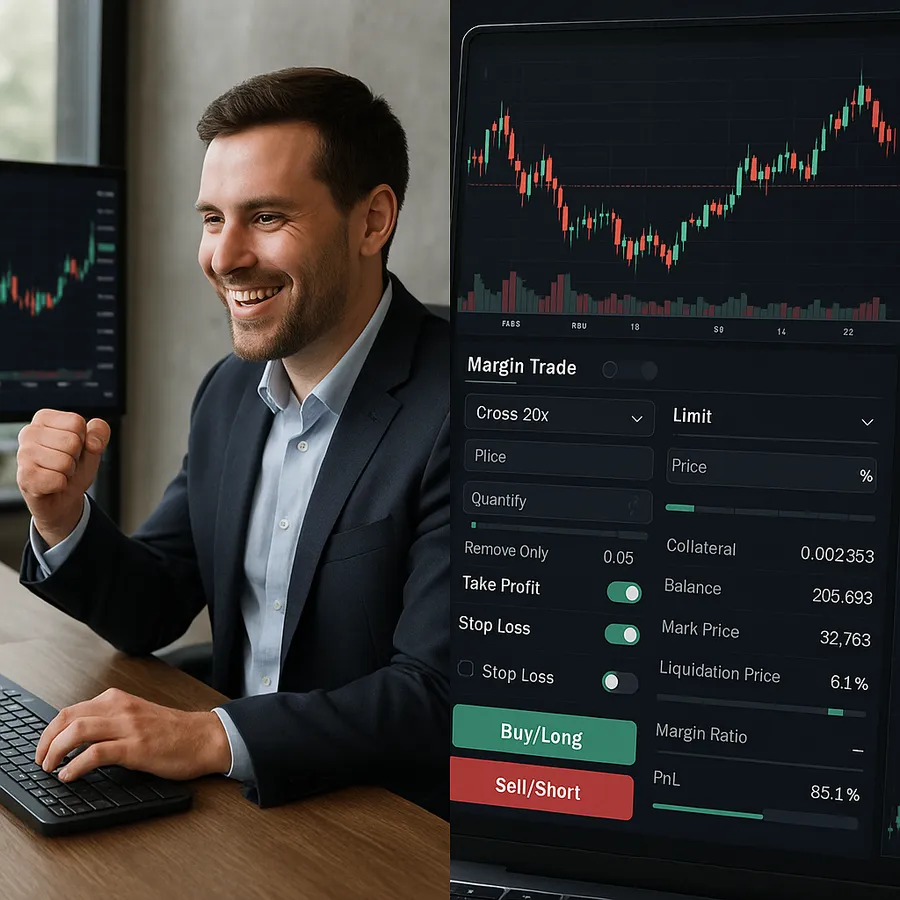
Signup to the Number 1 broker in 2026

Trading Success Journalist
Sarah Rodriguez chronicles the real experiences of professional traders, from prop firm challenges to scaling successful algorithms. Her compelling narratives reveal the human side of high-stakes trading while maintaining focus on actionable insights and measurable outcomes.
10 min read

