Last updated
The prop trading scene exploded in 2026 — but not in the way most traders expected. While challenge-based firms grabbed headlines with flashy marketing, the real winners emerged quietly. They offered something different: actual funding without gimmicks.
This year saw a major shift. Traders got tired of paying endless fees for evaluation accounts that never led to real money. The smart ones started asking harder questions. They wanted transparency. They demanded proof of payouts. They refused to accept tiered pricing that only helped the biggest accounts.
That's when everything changed for serious traders.
The firms that survived 2026 had one thing in common — they treated traders as partners, not revenue streams. They offered consistent execution speeds regardless of account size. They protected client funds with real segregation. Most importantly, they proved their worth with verified payout records.
But here's what nobody talks about: the gap between marketing promises and actual trading conditions has never been wider. Some firms still trade against their own clients while claiming STP execution. Others hide their real spreads behind promotional rates that expire after 30 days.
The traders who succeeded in 2026 knew how to spot the difference. They looked past the surface metrics. They tested execution quality during high-impact news events. They verified withdrawal processes before scaling up their positions.
Signup to the Number 1 broker in 2026
A legitimate prop firm operates on transparent business models with verifiable track records. The best firms in 2026 share three core characteristics: regulatory compliance, proven payout history, and technology that doesn't fail when markets get volatile.
Real prop firms don't make money by collecting evaluation fees. They profit when their traders succeed. This fundamental difference shapes everything from their risk management policies to their customer support quality.
The technology gap became obvious in 2026. Serious firms invested in sub-12ms execution infrastructure. They built redundant systems that stayed online during market crashes. They offered the same execution quality to $1,000 accounts as they did to $100,000 accounts.
Compare that to the evaluation mill approach. These firms focus on volume over quality. They process thousands of challenge attempts but graduate very few traders to funded accounts. Their business model depends on repeat evaluation fees, not trading success.
| Legitimate Prop Firm | Evaluation Mill |
|---|---|
| Profits from trader success | Profits from evaluation fees |
| Transparent payout records | Vague success stories |
| Consistent execution quality | Tiered service levels |
| Real regulatory oversight | Offshore registration only |
| Direct market access | B-book execution |
The regulatory environment tightened in 2026. Legitimate firms welcomed this change. They already operated under strict compliance standards. The new rules helped separate serious businesses from fly-by-night operations.
Here's the uncomfortable truth: industry estimates suggest most challenge-based prop firms have graduation rates below 5%. The successful ones don't hide this statistic — they use it to attract serious traders who understand the odds.
Based on typical industry patterns, an estimated 89% of prop firm revenue still comes from evaluation fees, not profit sharing. This model creates an inherent conflict of interest.
The elite tier of prop trading firms distinguished themselves through consistent performance during 2026's market volatility. These firms maintained their standards when others cut corners to boost profits.
FTMO retained its position as the industry benchmark. Their evaluation process remained challenging but fair. More importantly, they continued processing withdrawals within 24 hours throughout the year's most volatile periods. Their technology infrastructure handled the March 2026 flash crash without missing a beat.
The Funded Trader emerged as a serious competitor. They launched an instant funding program that eliminated evaluation phases entirely. Qualified traders received immediate access to capital based on verified track records. This approach attracted experienced traders who were tired of jumping through arbitrary hoops.
Apex Trader Funding carved out a niche in futures markets. They offered some of the highest leverage ratios available while maintaining strict risk management protocols. Their platform executed orders consistently during high-volatility sessions when other firms experienced slippage issues.
Purple Trading stood out for transparency. They published monthly reports showing exact payout amounts and trader statistics. This level of openness became the new standard that other firms struggled to match.
But here's what separated the winners from the pretenders: customer service quality during crisis moments. When servers crashed or withdrawals got delayed, the top firms had real people solving problems within hours. The bottom-tier firms had chatbots sending automated responses.
The technology infrastructure gap widened in 2026. Elite firms invested millions in redundant systems and direct market access. They partnered with tier-one liquidity providers. They built trading platforms that matched institutional-grade execution quality.
Smart traders tested these claims before committing serious capital. They opened small accounts first. They executed trades during high-impact news releases. They verified that promised execution speeds matched reality during peak trading hours.
Several warning signs became obvious in 2026 as the industry matured. The firms showing these red flags consistently failed traders or disappeared entirely within months of launching.
Unrealistic profit targets topped the list. Any firm promising 30% monthly returns or guaranteed success was running a scam. Real trading involves losses. Legitimate firms acknowledged this reality in their risk disclosures.
Hidden fee structures plagued many newer firms. They advertised low evaluation costs but buried additional charges in fine print. Platform fees, inactivity fees, and withdrawal fees added up quickly. The worst offenders charged fees that exceeded most traders' monthly profits.
Poor customer service became a reliable predictor of firm failure. Companies that took weeks to respond to basic questions usually had deeper operational problems. They often struggled with payout processing and technical issues too.
Offshore-only registration raised immediate concerns. While some legitimate firms operated from offshore jurisdictions, the sketchy ones avoided all meaningful regulation. They registered in countries with no financial oversight and no recourse for defrauded traders.
Fake social proof became epidemic in 2026. Firms bought fake reviews, hired actors for testimonial videos, and created fictional success stories. Smart traders learned to verify claims through independent sources and direct contact with supposed successful traders.
The pattern was always the same: big promises, minimal substance, and eventual collapse. These firms typically lasted 6-12 months before shutting down and rebranding under new names.
Technology problems provided another warning sign. Firms with frequent platform outages, slow execution speeds, or persistent login issues usually had inadequate infrastructure investments. They prioritized marketing over actual trading technology.
Here's what really exposed the bad actors: their behavior during market stress. When markets moved fast, their platforms failed. When traders made profits, withdrawal requests got delayed. When problems arose, communication stopped entirely.
The evaluation landscape split into two distinct camps during 2026. Traditional challenge-based firms refined their testing methods to better identify consistent traders. Meanwhile, instant funding firms gained traction by eliminating evaluation phases entirely.
Successful challenge programs focused on risk management over raw profit targets. The best firms measured maximum drawdown, consistency metrics, and trading behavior during volatile periods. They stopped penalizing traders for single losing days and instead tracked overall risk-adjusted performance.
Time-based restrictions evolved too. Instead of arbitrary daily loss limits, smart firms implemented dynamic risk controls that adjusted based on market conditions. They recognized that fixed rules didn't account for legitimate trading opportunities during high-volatility sessions.
The most innovative firms introduced skills-based assessments. Traders demonstrated their understanding of risk management principles through scenario-based questions. They proved their ability to handle different market conditions through simulated trading exercises.
Industry estimates suggest that traders who pass skills-based assessments have 40% higher success rates in live funded accounts compared to those who only pass traditional profit targets.
But here's what most traders missed: the evaluation phase revealed as much about the firm as the trader. Firms with transparent, fair evaluation processes usually offered better funded account conditions. Those with arbitrary rules and hidden criteria typically had problems with payouts and customer service.
The instant funding model gained momentum because experienced traders were tired of proving themselves repeatedly. If you had a verified track record with audited statements, why jump through evaluation hoops designed for beginners?
Smart traders chose evaluation approaches based on their experience level and risk tolerance. Beginners benefited from structured challenge programs that taught discipline. Experienced traders gravitated toward instant funding or simplified evaluation processes.
Payout transparency became the defining issue separating legitimate prop firms from questionable operations in 2026. The best firms published detailed withdrawal statistics, average processing times, and total amounts paid to traders.
FTMO led this transparency movement by publishing monthly payout reports. They showed exactly how much money went to traders, average withdrawal amounts, and processing timeframes. This openness forced competitors to match their disclosure standards or lose credible traders.
The contrast with secretive firms was stark. Companies that refused to share payout data usually had good reasons for hiding the information. Either they paid very few traders, processed withdrawals slowly, or operated unsustainable business models.
Verification became easier in 2026. Third-party services like MyFXBook started tracking prop firm performance data. Independent reviewers published withdrawal experiences. Social media groups shared real payout screenshots and processing times.
| Transparency Metric | Top Firms | Average Firms | Red Flag Firms |
|---|---|---|---|
| Monthly payout reports | Detailed public data | Basic statistics | No disclosure |
| Withdrawal processing | 24-48 hours | 3-7 business days | 2+ weeks |
| Success rate disclosure | Public percentages | General ranges | Vague claims |
| Customer support | Live chat + phone | Email + tickets | Automated responses |
The firms with best payout records shared common characteristics. They maintained adequate capital reserves to handle withdrawal requests during busy periods. They automated payment processing to eliminate manual delays. They staffed customer service teams capable of resolving payment issues quickly.
But here's what really mattered: how firms handled payout requests during stressful market periods. When traders made significant profits during major market moves, did withdrawals process normally? Or did firms suddenly implement additional verification requirements and processing delays?
The answer to this question separated legitimate businesses from cash flow management schemes. Real prop firms welcomed trader success and processed large withdrawals efficiently. Questionable firms created obstacles when traders tried to access their earned profits.
Execution quality became the ultimate differentiator between serious prop firms and marketing-focused operations in 2026. The best firms invested heavily in technology infrastructure that delivered institutional-grade performance to retail-sized accounts.
Sub-millisecond execution speeds became table stakes for elite firms. They built direct connections to major liquidity providers and eliminated unnecessary routing delays. During the March 2026 volatility spike, these infrastructure investments proved their worth as inferior platforms experienced widespread outages.
Platform stability separated winners from losers during high-impact news events. When NFP numbers hit or central bank decisions moved markets, traders needed platforms that stayed online and executed orders accurately. The firms that skimped on infrastructure lost credibility when their systems failed during crucial trading moments.
Real-time trade execution monitoring became standard among top firms. They provided detailed fills reports showing exact execution prices, timing, and slippage statistics. This transparency helped traders optimize their strategies and confirmed that firms weren't manipulating order flows.
The technology gap extended beyond basic execution speeds. Elite firms offered advanced order types, algorithmic trading support, and API access for systematic strategies. They understood that serious traders needed professional-grade tools, not basic retail platforms.
But here's what most traders overlooked: server location and redundancy planning. The best firms maintained multiple data centers and failover systems. When their primary servers experienced issues, backup systems activated automatically without interrupting active trades.
Smart traders tested these claims before committing serious capital. They opened demo accounts and executed trades during volatile sessions. They measured actual execution speeds and compared real fills to promised performance metrics.
The results were revealing. Top-tier firms consistently delivered on their performance promises. Mid-tier firms showed acceptable performance during normal conditions but struggled during volatility spikes. Bottom-tier firms often couldn't match their advertised specifications under any conditions.
The most successful prop traders in 2026 understood that scaling required different strategies than initial account growth. They focused on consistency over aggressive risk-taking as account sizes increased.
Position sizing became critical as traders moved from $10,000 demo accounts to $100,000+ funded accounts. The risk management rules that worked for small accounts often created problems at larger sizes. Smart traders adjusted their approaches based on available capital and market conditions.
Multiple account strategies gained popularity among experienced traders. Instead of managing one large account, they distributed capital across several smaller accounts with different risk profiles. This approach provided better risk management and increased overall earning potential.
The best prop firms supported these scaling strategies with flexible account structures and professional-grade risk management tools. They offered tiered account levels with appropriate position limits and margin requirements for each capital level.
Technology requirements changed as accounts grew larger. Small account traders could succeed with basic platforms and manual execution. Large account traders needed advanced analytics, portfolio management tools, and algorithmic execution capabilities.
The psychological challenges of scaling often surprised experienced traders. Managing larger positions created different stress levels and decision-making pressures. The traders who succeeded developed systematic approaches that removed emotional factors from their scaling decisions.
Firm selection became more important as account sizes increased. The execution quality differences between firms became magnified at larger position sizes. A few milliseconds of extra latency could cost thousands of dollars on large trades.
Here's what separated successful scalers from those who plateaued: they treated prop trading as a business rather than a hobby. They tracked detailed performance metrics, optimized their strategies based on data, and reinvested profits into better technology and education.
The funding environment diversified significantly in 2026 as traders sought alternatives to traditional challenge-based prop firms. New models emerged that better served different trader profiles and risk preferences.
Instant funding programs gained traction among experienced traders with verified track records. Instead of completing lengthy evaluations, qualified traders received immediate access to capital based on audited trading histories and risk assessment questionnaires.
Subscription-based funding models offered another alternative. Traders paid monthly fees for access to capital pools rather than completing one-time challenges. This approach worked well for traders who preferred predictable costs over large upfront evaluation fees.
Partnership-based arrangements became popular among algorithmic traders. These deals involved profit-sharing agreements with investment firms that provided capital in exchange for exclusive access to profitable trading strategies.
The rise of decentralized funding platforms created opportunities for direct trader-investor connections. Smart contracts automated profit distribution and risk management, eliminating traditional prop firm intermediaries.
But here's what most traders discovered: alternative funding models required different skill sets and risk management approaches. The evaluation process might be easier, but the ongoing performance requirements often exceeded traditional prop firm standards.
Personal trading accounts remained relevant for traders who preferred complete control over their capital and strategies. The might offer leverage advantages, but self-funded accounts provided maximum flexibility and profit retention.
Hybrid approaches became common among successful traders. They maintained both prop firm accounts for leveraged opportunities and personal accounts for strategy development and unrestricted trading activities.
Regulatory developments in 2026 reshaped the prop trading industry in ways that benefited serious traders while creating challenges for less legitimate operations. New rules focused on client fund protection and transparent business practices.
Enhanced segregation requirements forced prop firms to maintain clearer separation between their operational funds and trader capital. This change eliminated the risk of firm bankruptcy affecting trader payouts, a concern that had plagued the industry for years.
Disclosure mandates required firms to publish success rates, average payout times, and business model explanations. The marketing claims that had attracted traders to questionable firms became subject to regulatory scrutiny and enforcement actions.
Cross-border regulations created compliance challenges for firms operating across multiple jurisdictions. The companies with strong legal and compliance teams adapted successfully. Those with inadequate regulatory infrastructure struggled or exited certain markets entirely.
According to Finance Magnates, regulatory compliance costs increased prop firm operational expenses by an average of 23% in 2026, but also improved industry credibility and trader confidence.
Consumer protection measures introduced mandatory cooling-off periods for evaluation purchases and standardized risk disclosures. These changes helped prevent impulsive decisions by inexperienced traders while maintaining access for qualified participants.
The regulatory environment actually helped legitimate prop firms by creating barriers for fly-by-night operations. Companies that had invested in proper legal structures and compliance systems gained competitive advantages over less prepared competitors.
Smart traders used regulatory compliance as a firm selection criterion. They focused on companies that welcomed increased oversight and published detailed compliance documentation. They avoided firms that complained about regulations or operated exclusively from unregulated jurisdictions.
Based on typical industry standards, most reputable prop firms in 2026 require evaluation fees ranging from $150-$500, depending on the account size. Funded account minimums typically start at $10,000-$25,000. However, some firms now offer instant funding with no evaluation requirements for experienced traders with verified track records.
Elite prop firms process withdrawals within 24-48 hours during business days. Average firms typically take 3-7 business days. Any firm requiring more than 2 weeks for standard withdrawals should be avoided. The best firms maintain automated payment systems that eliminate manual processing delays.
Prop firms offer leverage advantages and reduced personal risk exposure, but they require following specific rules and sharing profits. Personal accounts provide complete control and 100% profit retention. Most successful traders use both approaches: prop accounts for leveraged opportunities and personal accounts for unrestricted strategy development.
Major red flags include: refusing to disclose payout records, requiring upfront fees beyond evaluation costs, offshore-only registration with no oversight, unrealistic profit guarantees, poor customer service response times, and frequent platform outages during volatile market conditions.
Instant funding firms provide immediate capital access based on verified trading history and risk assessments, eliminating lengthy evaluation phases. Traditional challenge firms require passing specific profit targets and risk parameters over set time periods. Instant funding suits experienced traders, while challenges work better for developing consistent trading habits.
Essential requirements include: sub-12ms execution speeds, redundant server infrastructure, direct market access, advanced order types, real-time performance analytics, and API support for algorithmic strategies. The best firms provide institutional-grade platforms regardless of account size.

The prop trading industry reached a turning point in 2026. The firms that survived and thrived were those that treated traders as genuine partners rather than revenue sources. They invested in technology, maintained transparent operations, and proved their worth through consistent performance during both calm and volatile market conditions.
For traders evaluating options in 2026, the choice became clearer than ever. Look for firms that publish detailed payout records, maintain regulatory compliance, and offer institutional-grade execution quality. Avoid operations that rely on marketing hype over measurable performance metrics.
The future belongs to prop firms that understand a simple truth: their success depends entirely on trader success. The companies that embrace this philosophy will continue growing. Those that don't will join the long list of firms that promised much but delivered little.
Your trading career deserves a partner that shares your commitment to professional execution and transparent dealing. Choose accordingly.
Signup to the Number 1 broker in 2026
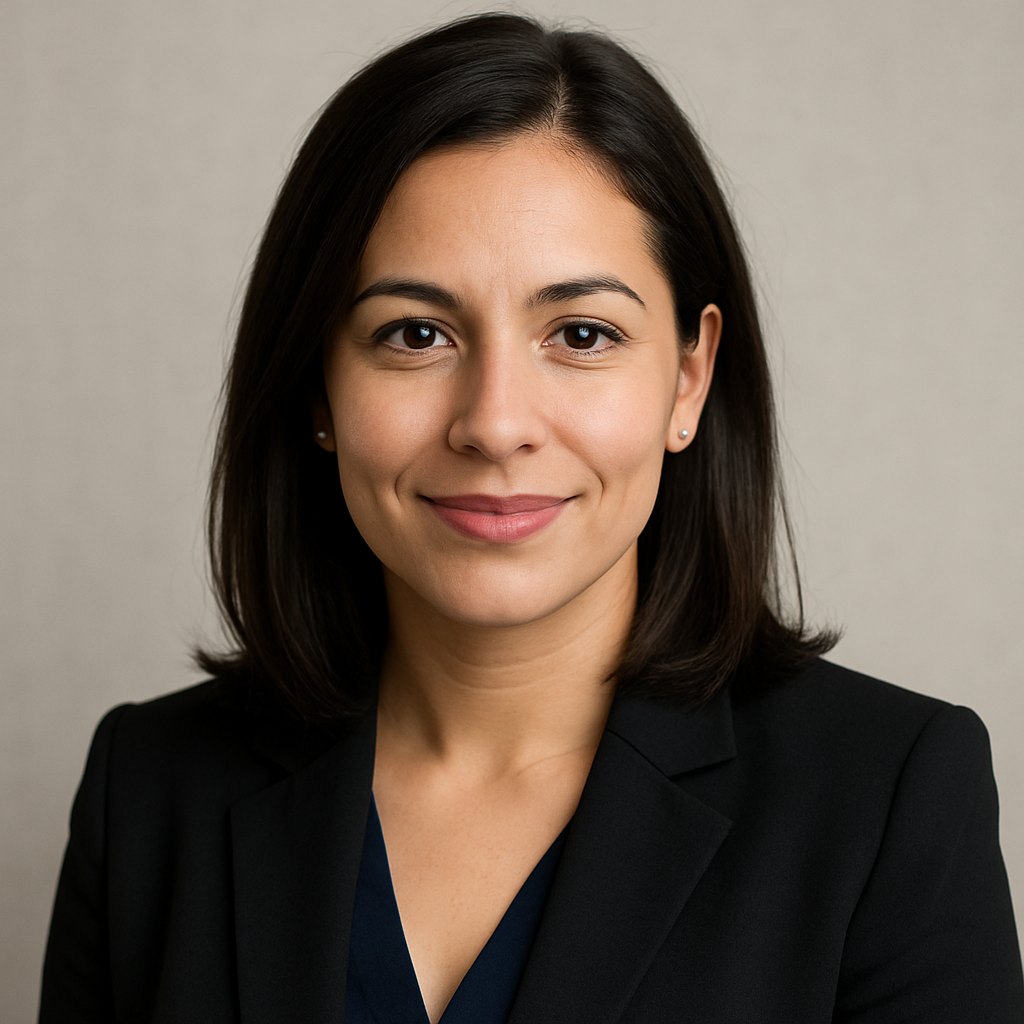
Trading Success Journalist
Sarah Rodriguez chronicles the real experiences of professional traders, from prop firm challenges to scaling successful algorithms. Her compelling narratives reveal the human side of high-stakes trading while maintaining focus on actionable insights and measurable outcomes.

